
QUANTIFIED VALUE
Quantified Value
Four value themes, each tied to a quantifiable outcome of Suxin’s solution. Open any card to read; every article follows a what / why / how-and-proof arc.
Quality
−20%Real-time WPS conformity by AI, three-color alerts and closed-loop improvement — ISO 3834 / EN 1090 / EN 15085 ready, rework down ~20%.
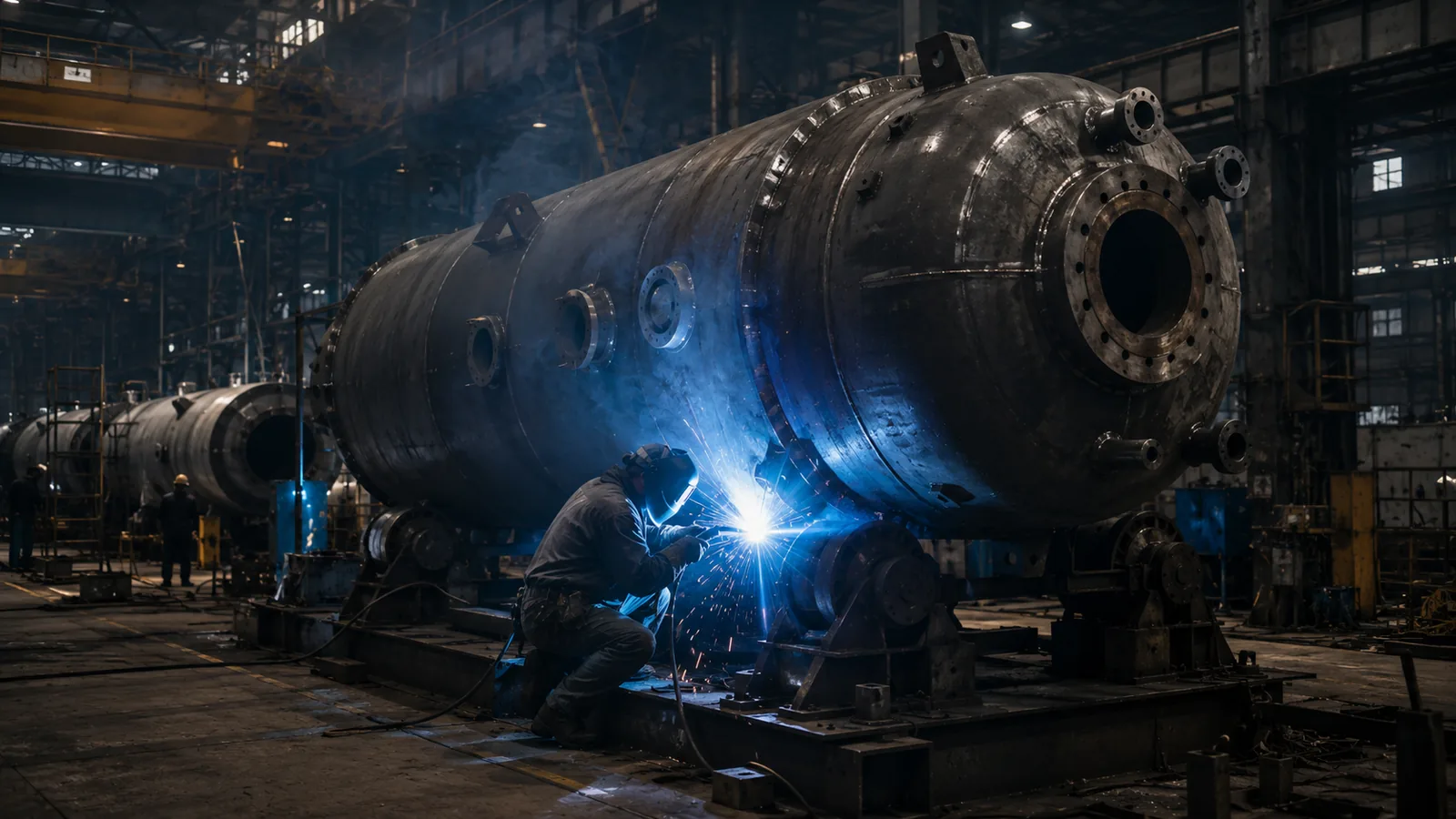
Meeting ISO 3834 / EN 1090: AI makes every weld traceable and compliance provable
To sell welded parts into Europe's pressure-equipment, steel-structure and rail markets, you must meet ISO 3834 / EN 1090 / EN 15085. This article explains why the real difficulty lies in proving compliance — why real-time WPS conformity checking depends on welding-AI process recognition, and how the record and traceability for every weld can become an automatic by-product of welding.
Read →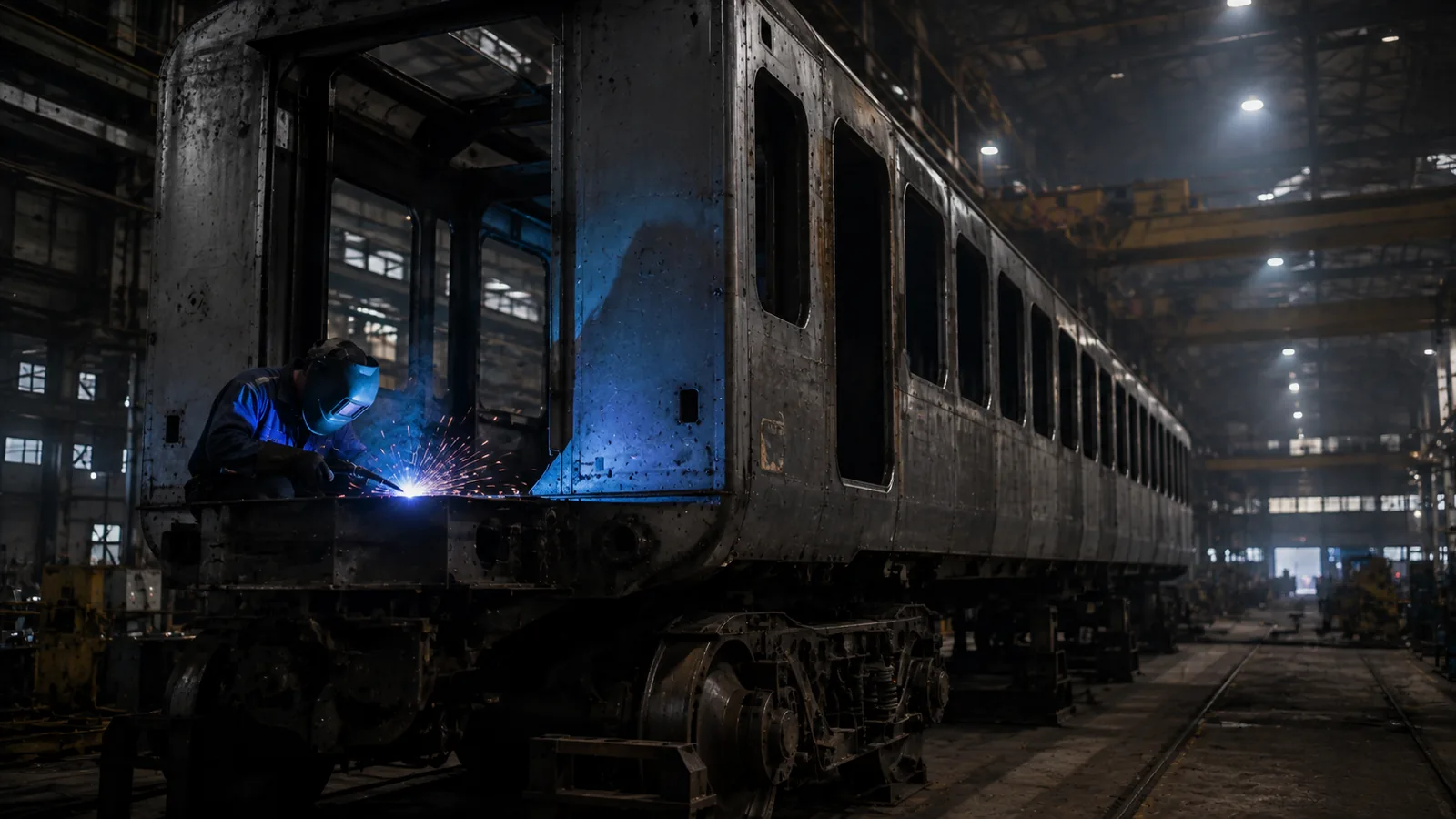
EN 15085 rail-vehicle welding: how AI process recognition makes weld-by-weld traceability real
EN 15085 requires graded control of safety-relevant welds in rail vehicles and weld-by-weld traceability. This article explains those requirements and how welding AI, using scheduling and execution data to perform process recognition and classification, systematically meets its high traceability bar with born-digital records for every weld.
Read →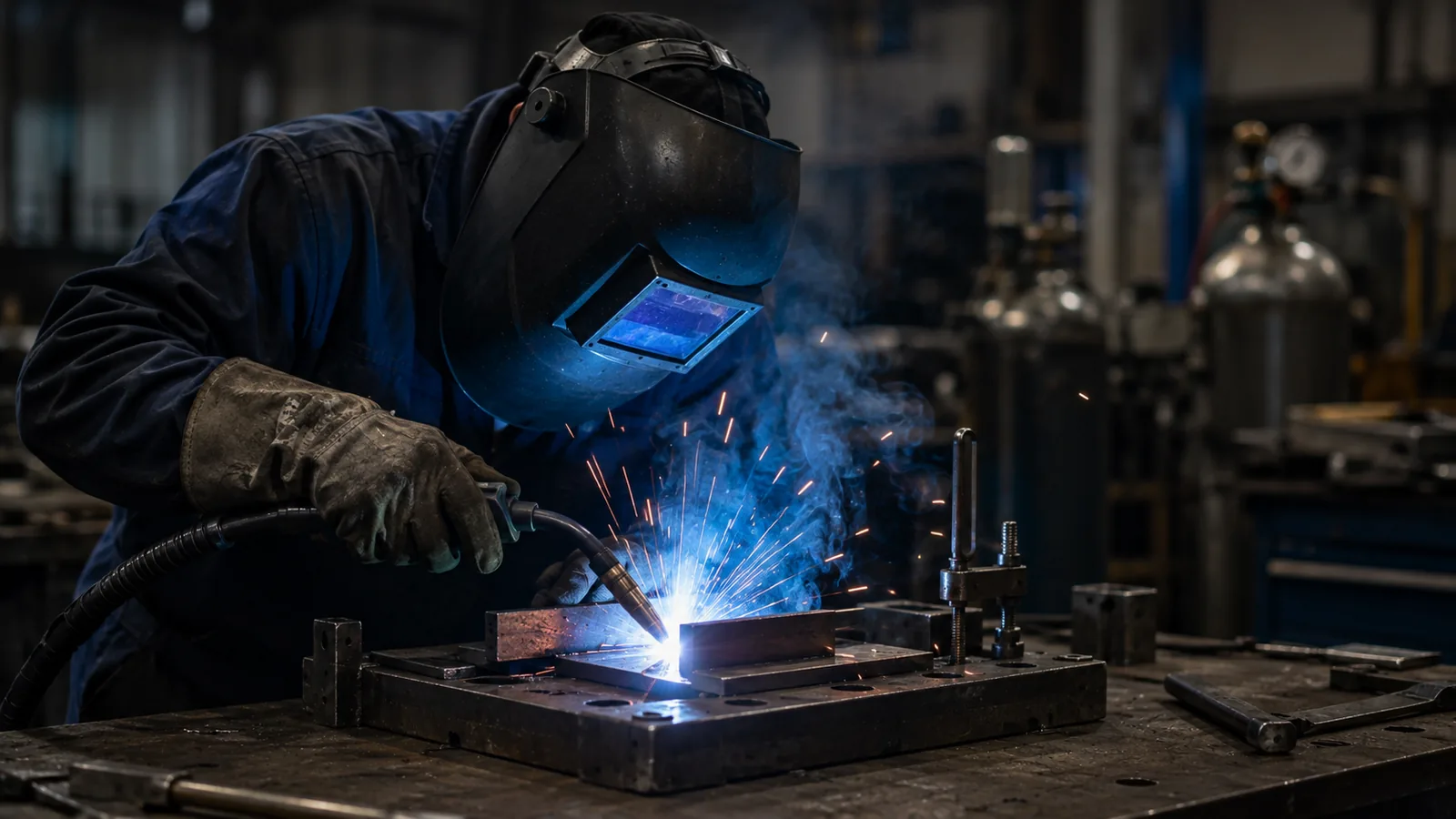
WPS and PQR: how an AI-fused welding procedure specification supports compliance
The WPS (Welding Procedure Specification) and PQR (Procedure Qualification Record) are the core documents of welding compliance. This article explains how the two relate, how to check conformity against the WPS weld by weld in real time, and what an AI-fused next-generation welding procedure specification and procedure-quality assessment mean.
Read →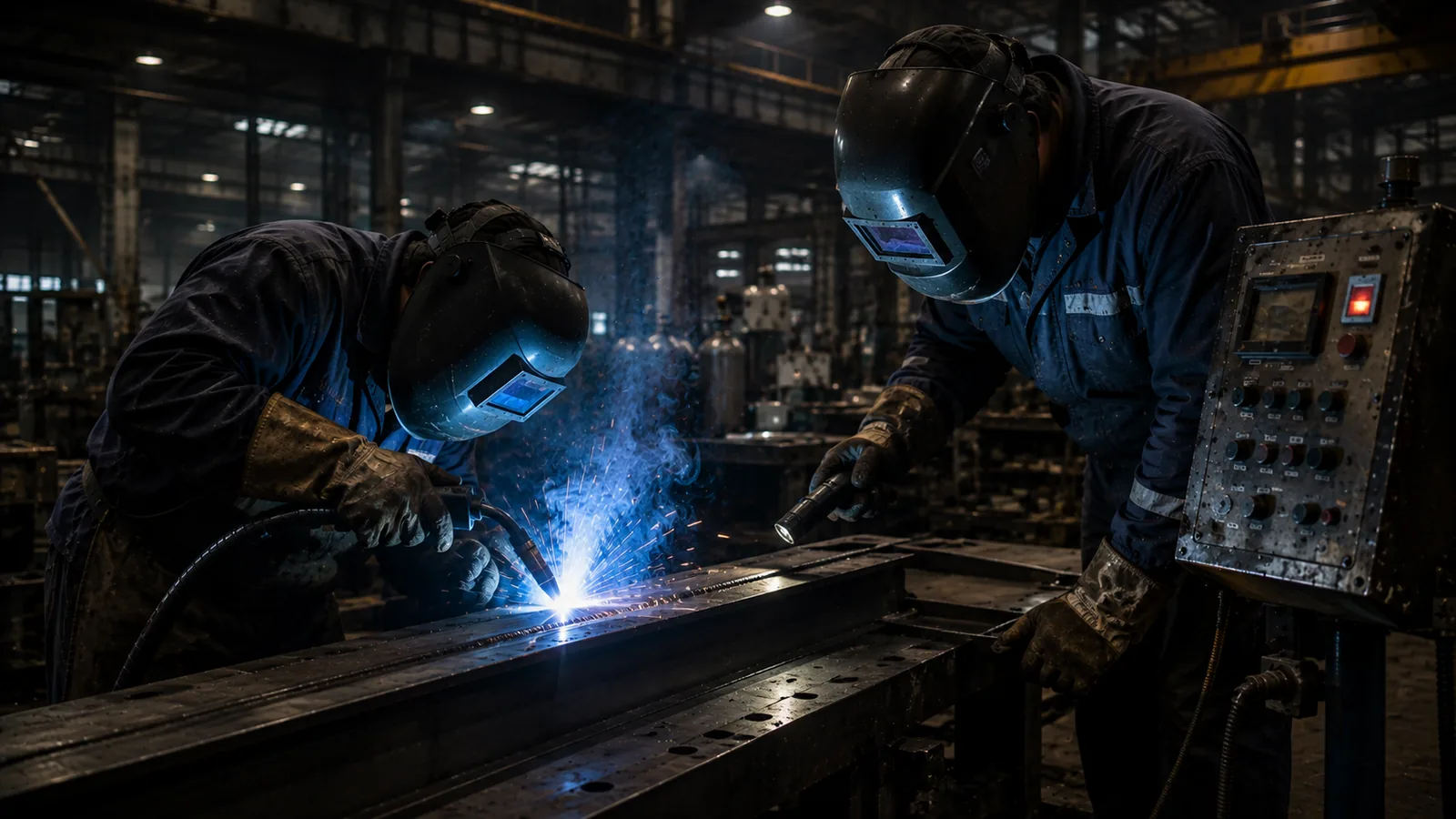
Weld quality need not wait for final inspection: AI judges conformity on the spot, rework down ~20%
Welding defects show up late, and a single rework typically costs two to three times a first-pass sound weld. Move the quality line forward to the welding floor — capture current/voltage/gas flow in real time, let AI judge conformity on the spot, and close the loop with three-color alerts — to cut the rework rate by about 20%. This article covers how welding quality control shifts from after-the-fact rework to in-process prevention.
Read →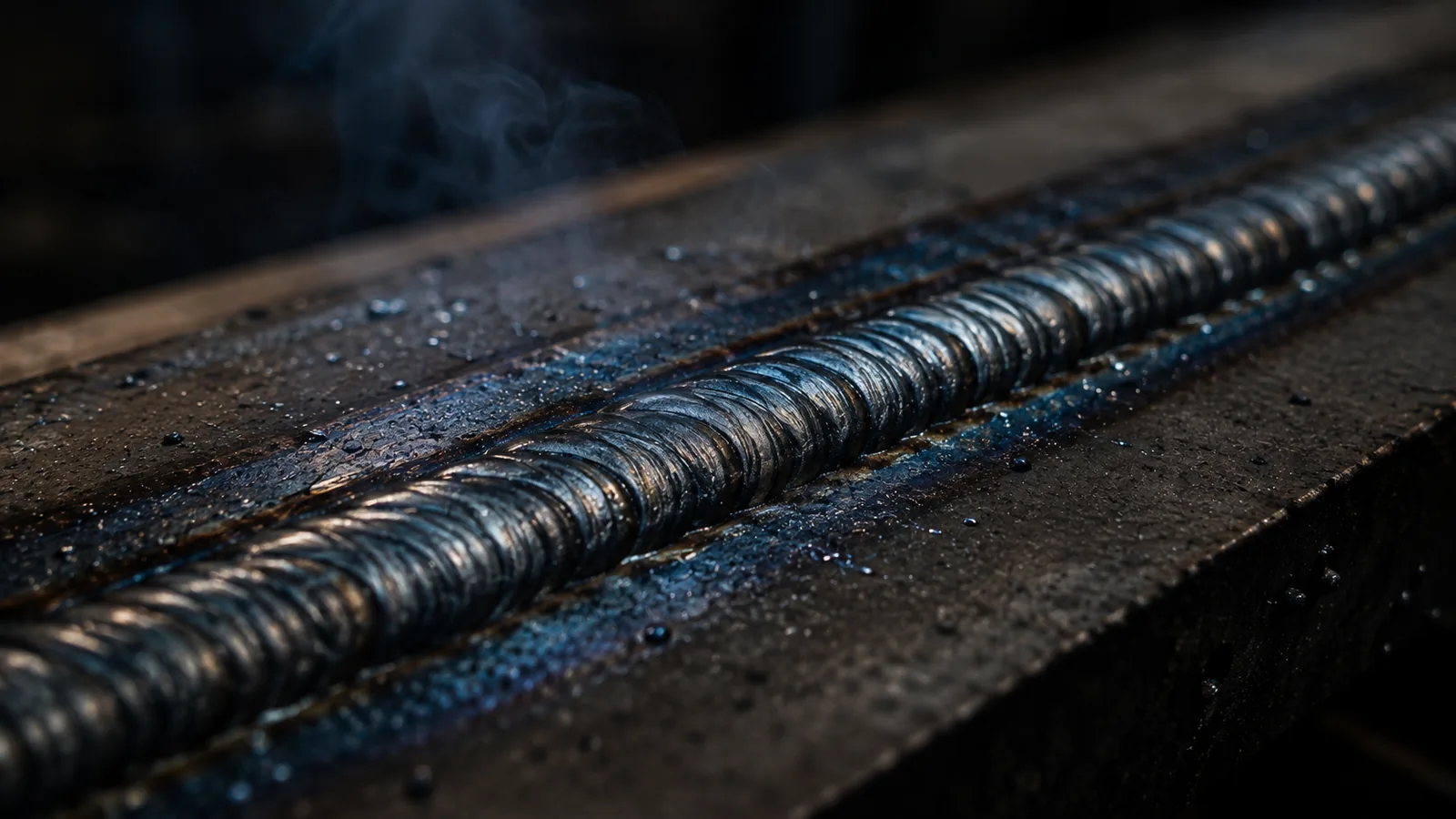
How to prevent weld porosity at the source: active gas control and real-time AI alerts
Porosity is one of the most common welding defects, usually tied to insufficient shielding-gas coverage or process fluctuation. This article explains the main causes of weld porosity and how to prevent it — including gas-line leakage as a hidden trigger and leak detection, and why more shielding-gas flow is not always better.
Read →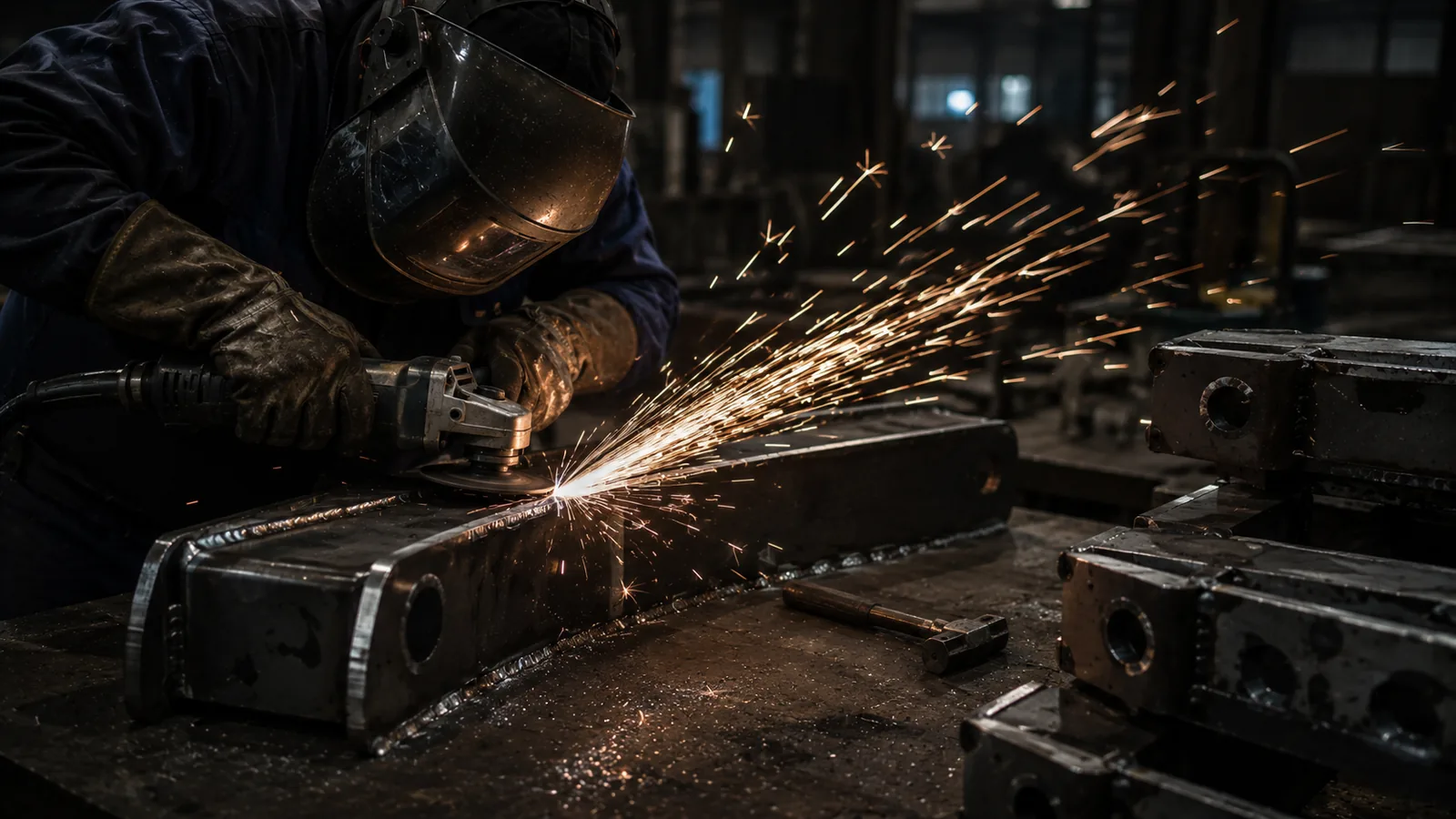
Costing welding rework: how AI conformity checking cuts the rework rate by 20%
A single welding rework typically costs far more than the first weld. This article breaks down the visible and hidden components of welding rework cost and explains why prevention is economically far superior to after-the-fact rework.
Read →Gas Saving
−25%Active closed-loop gas control removes arc-start overshoot, flow mismatch, end-of-weld spill and leaks — cutting wasted shielding gas.
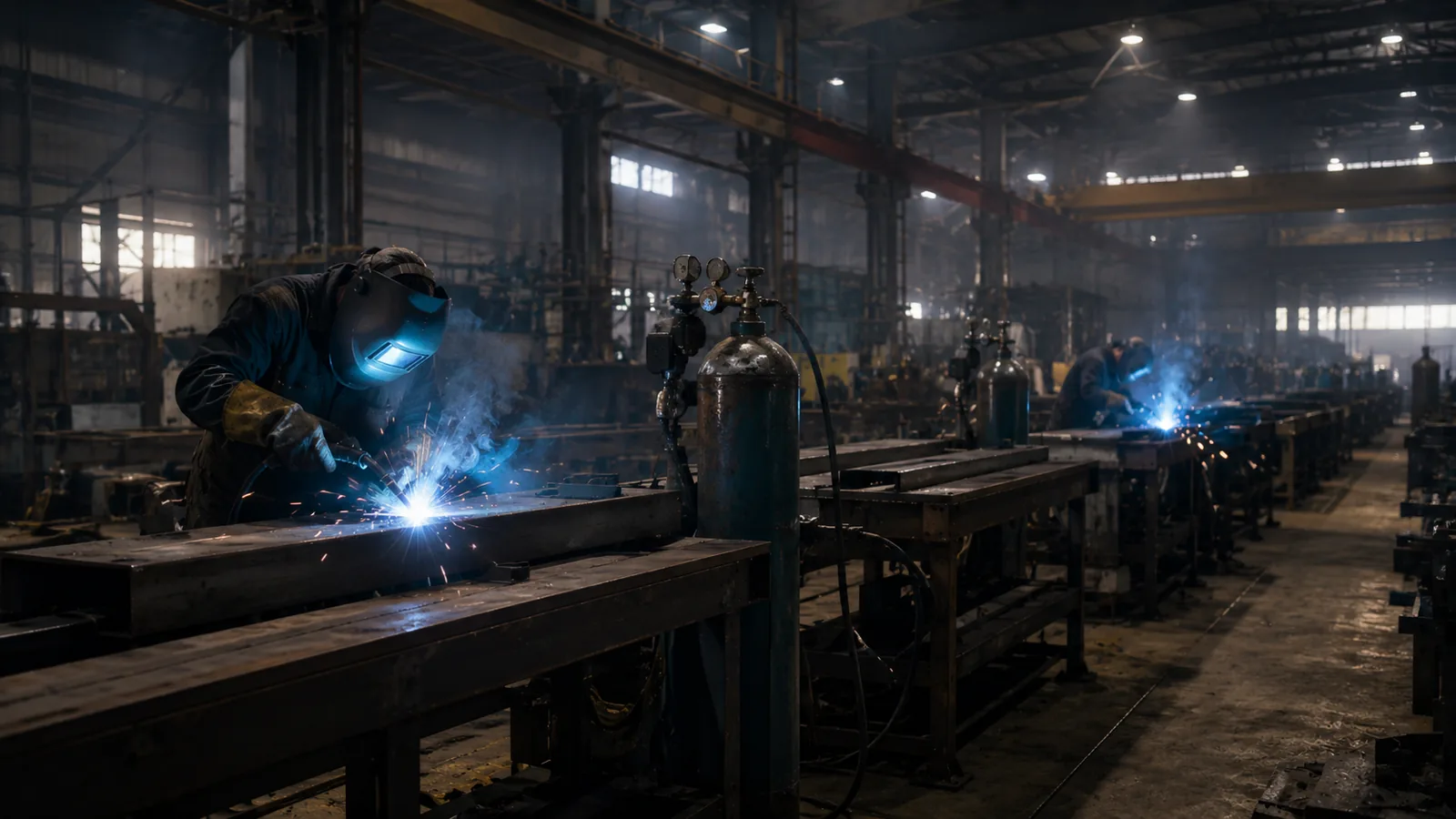
The complete guide to welding gas savings: reclaim the ~25% of shielding gas wasted every year
On a typical MIG/TIG line about a quarter of shielding gas is wasted. Gas saving = eliminating ineffective supply: precision sensing + active closed-loop control. Proven ~15% at BMW, 20%+ at Honda, ~30% median in China.
Read →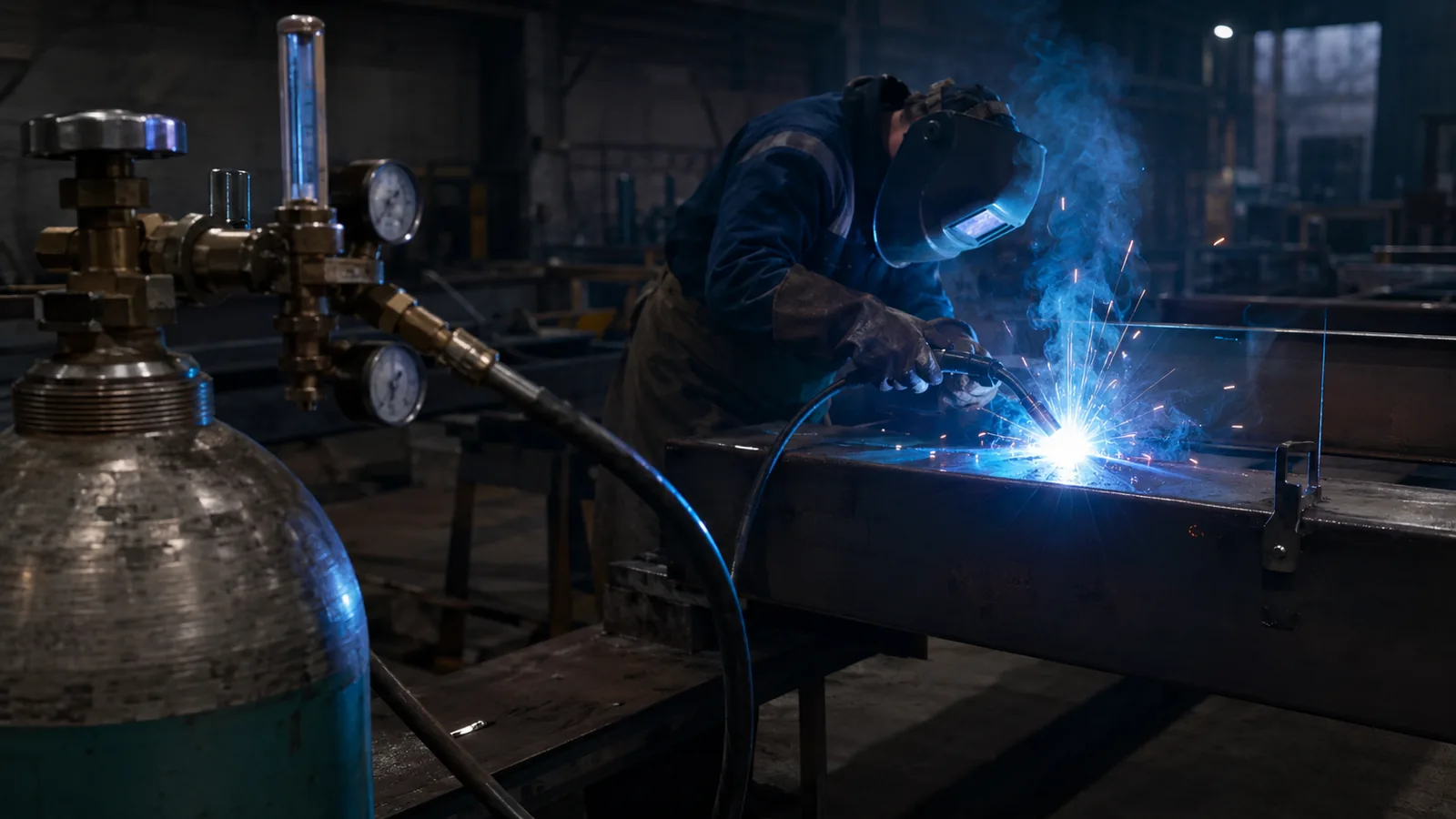
The four sources of shielding-gas waste
About 25% of welding shielding gas is wasted — from metering & flow mismatch, arc-start overshoot, end-of-weld spill and line leaks. This article breaks down each one and explains where welding gas saving should begin.
Read →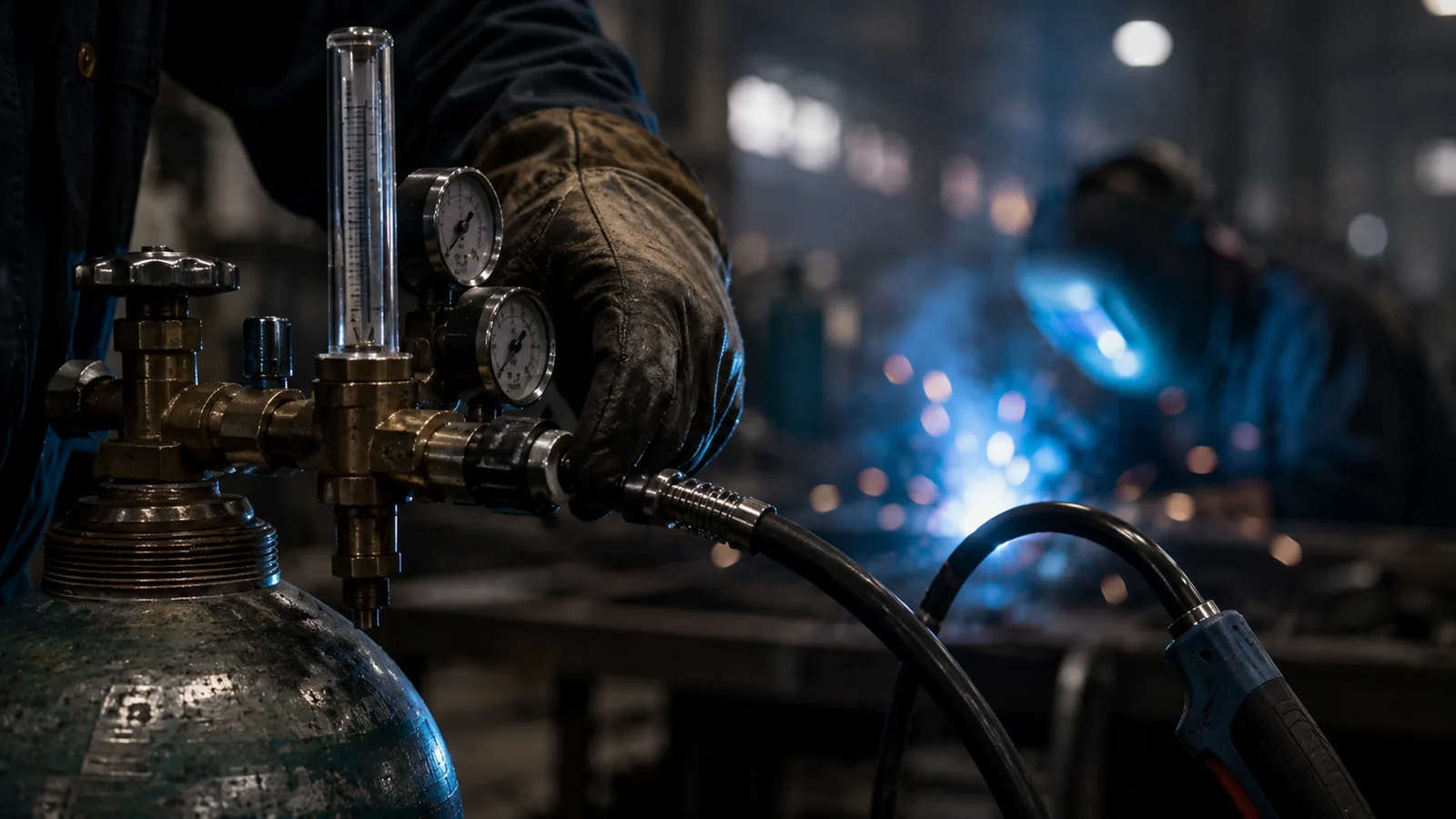
Manual flow adjustment vs. active closed-loop gas control: how to achieve welding gas saving
There are several ways to reduce shielding-gas waste: turning the flow down manually, monitoring without control, or active closed-loop supply on demand. This article compares their differences and the limits of where each applies.
Read →Productivity
+10%Per-second arc-on ÷ power-on gives true OEE; the PDCA board surfaces idle time and abnormal downtime, releasing existing capacity first.
The utilization question: why 100 welders often deliver only half their capacity
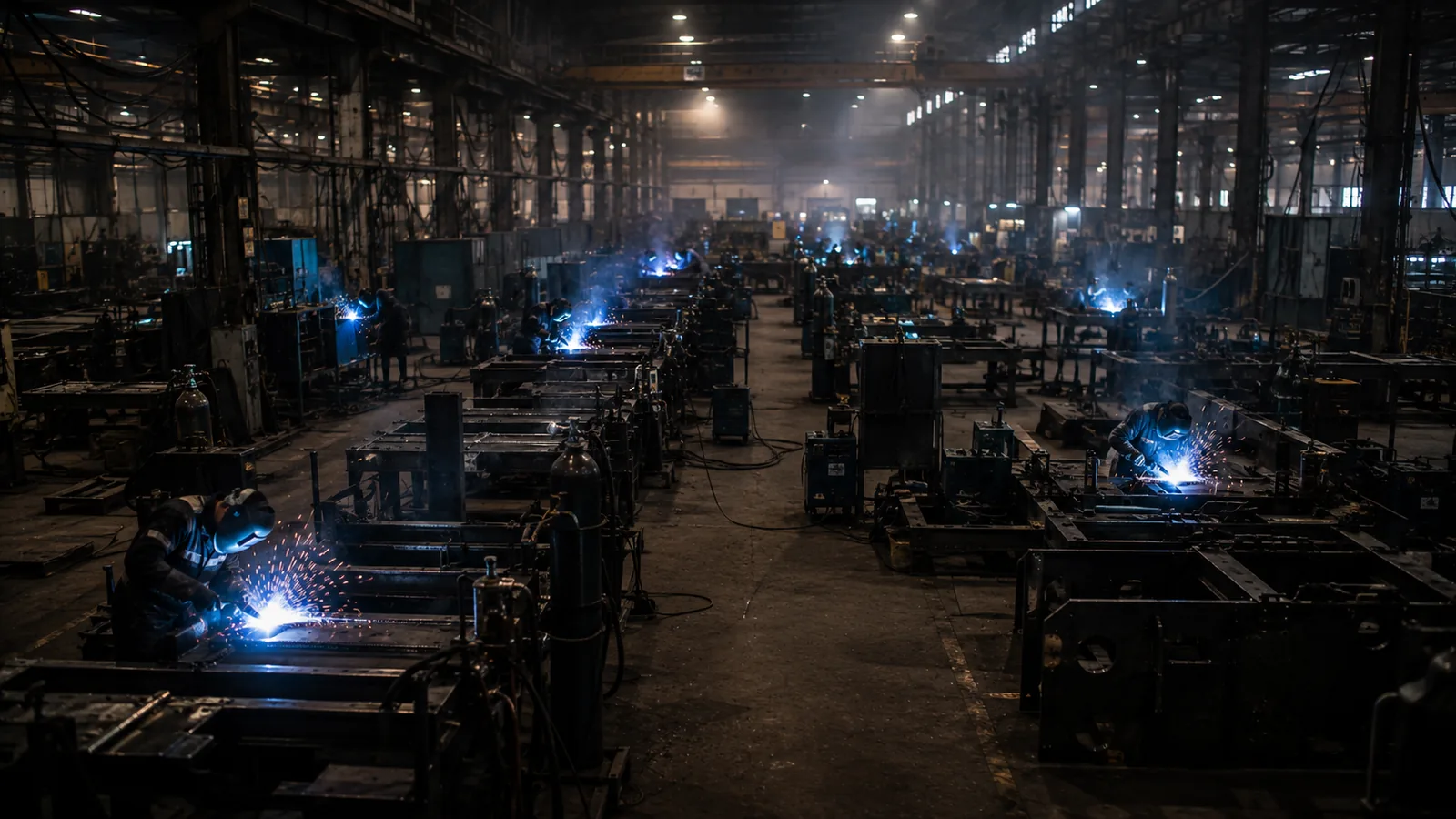
A powered-on welder is not a welding welder. This article explains why welding utilization (OEE) is underestimated, how to measure it objectively as arc-on ÷ power-on, and how to release existing capacity before expanding.
Read →
AI time-slicing: turning arc-on ÷ power-on into a trustworthy welding utilization figure
How to measure welding utilization objectively? Dividing arc-on time by power-on time yields welding utilization (OEE), quantifying the hidden loss of being powered-on but not welding, and explaining the role of AI and the hard money an OEE gain represents.
Read →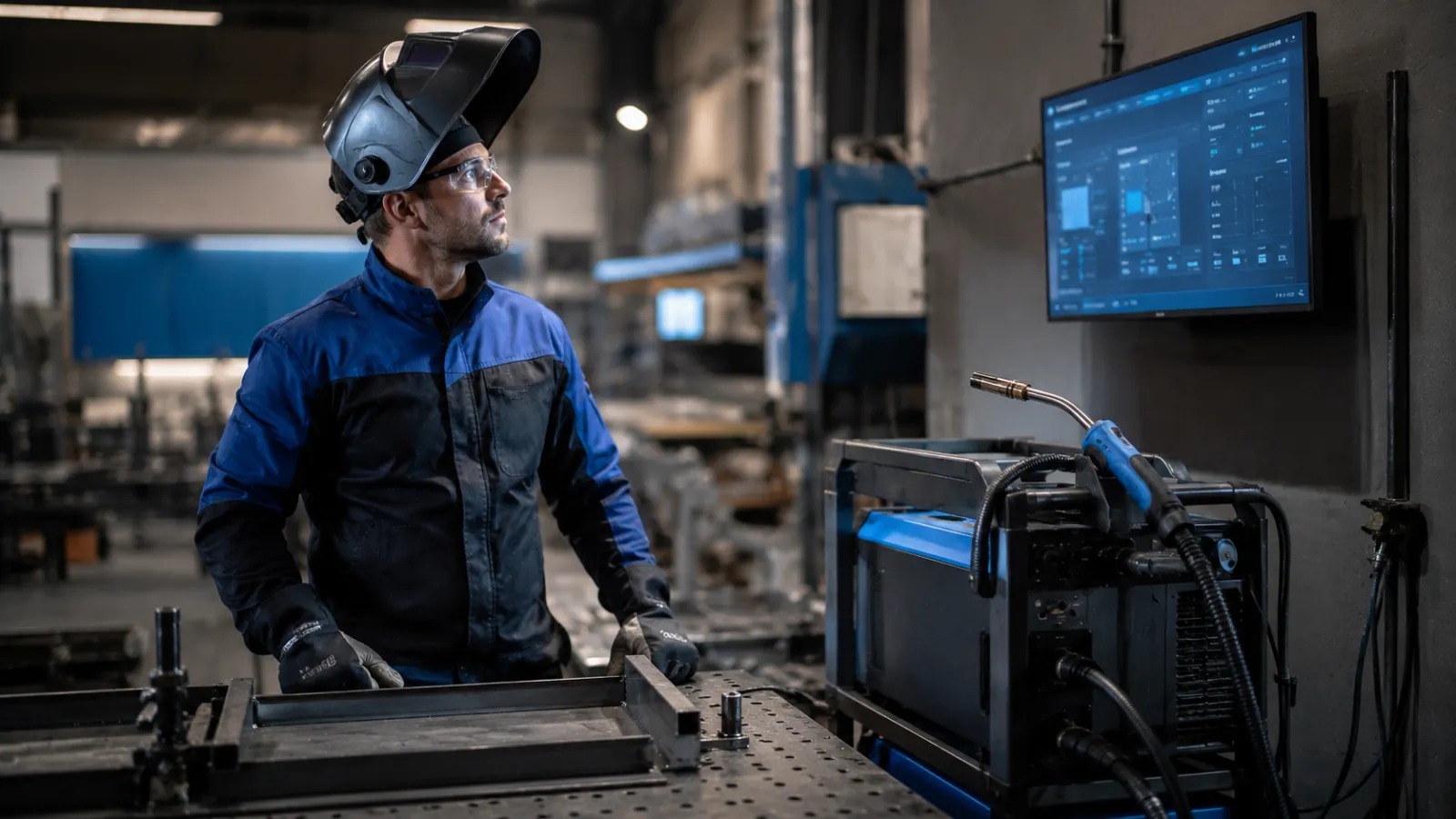
Why abnormal welder downtime is hard to catch: recovering true utilization with AI time-slicing
The real loss from abnormal downtime is idle labor, and the hard part is catching it. Collect the data first, then find the welders with abnormal utilization across the whole fleet, and use AI time-slicing to distinguish normal from abnormal interruptions and alert in real time.
Read →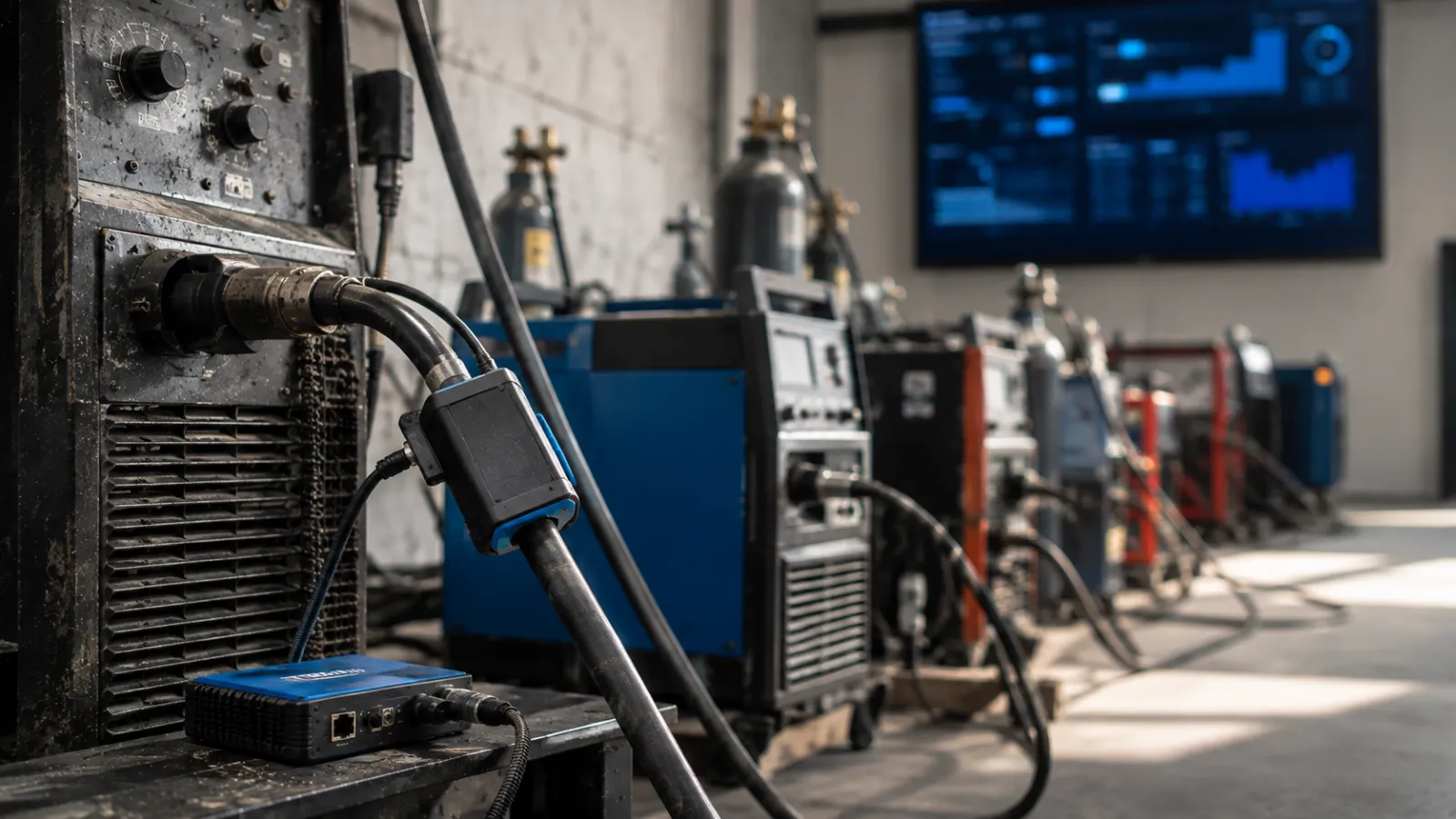
Even old welders can join networked fleet control: current + AI bridges interfaces and generations
Old welders with no data interface can join networked fleet control too: modern welders with an interface sample current/voltage/fault codes directly at under 3% of cost, and those without use current sensing + AI — brought under unified management, matched to process, for higher quality, lower cost and greater efficiency.
Read →More
−90%Born-digital weld records and full-lifecycle traceability — documentation cost down ~90%.
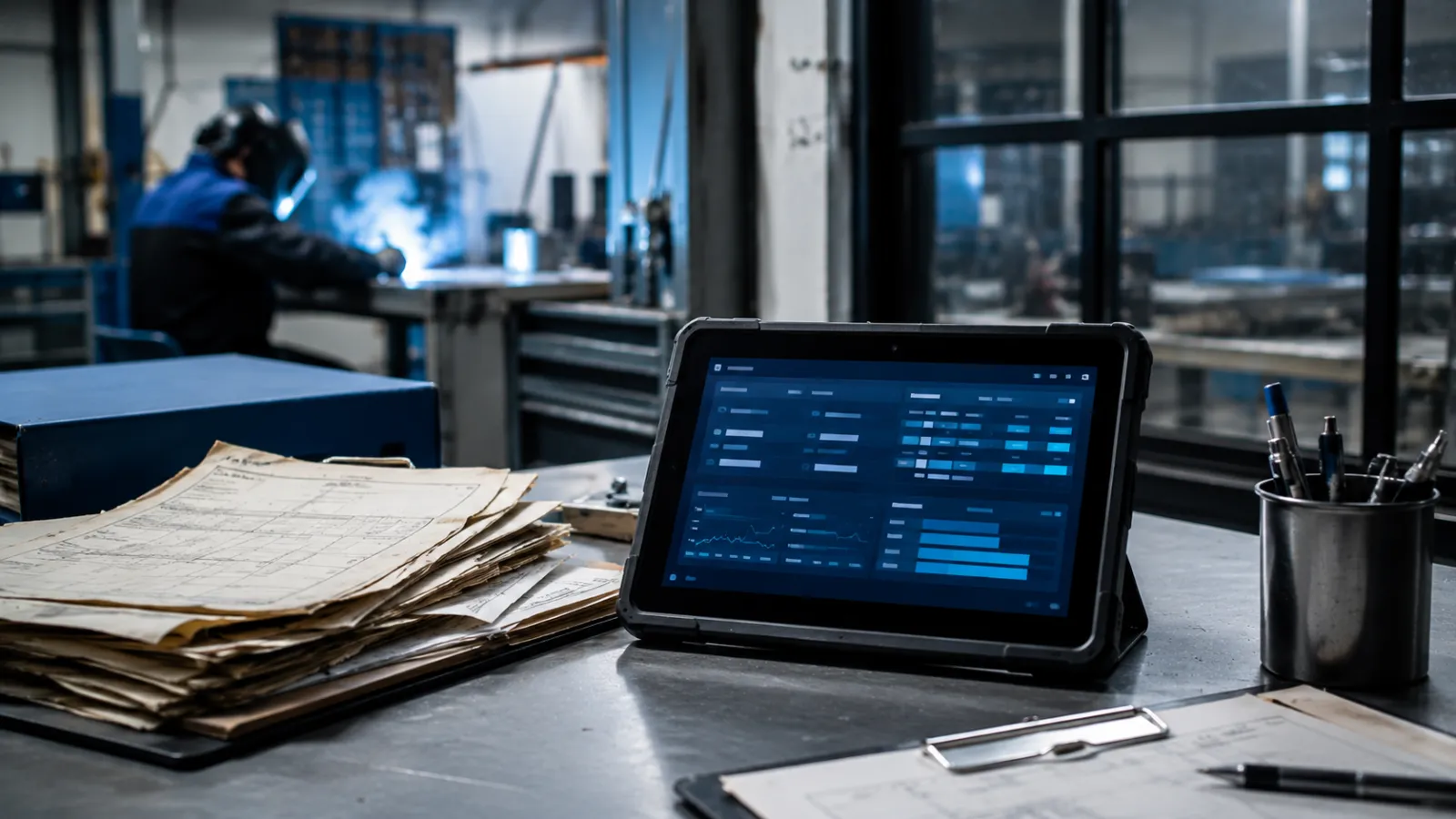
From paper to born-digital: AI makes welding records traceable
Paper records capture the result, not the process. Make welding records born-digital and let AI handle process recognition, matching and compliance judgment automatically — enabling weld traceability and cutting documentation cost by ~90%.
Read →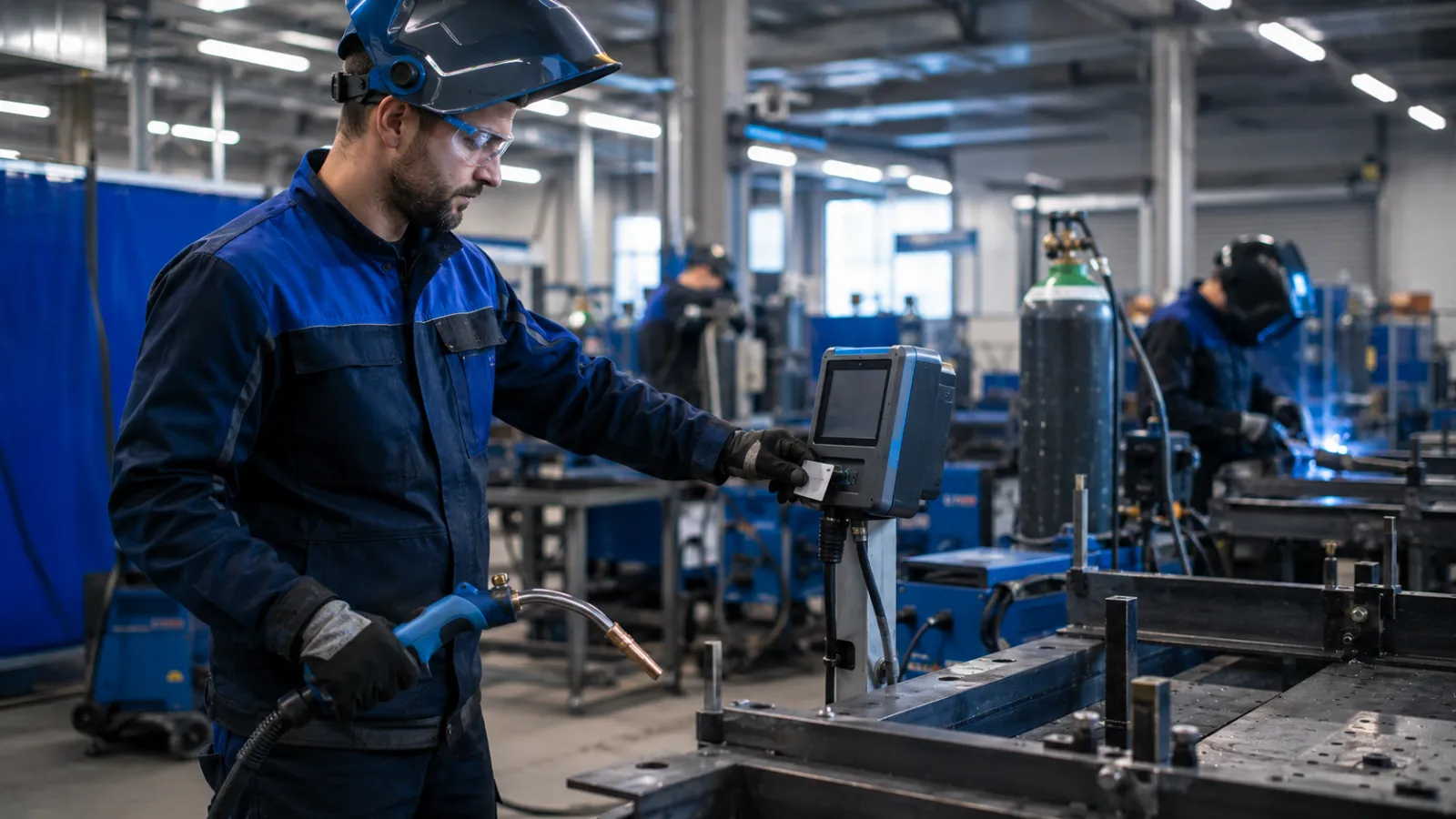
The full lifecycle of a weld: AI makes every seam searchable and provable
What data does a weld leave behind, from scheduling to traceability? Taking a full-lifecycle view, this shows the structure of a born-digital weld record and how AI automatically judges its process and compliance — enabling one-click traceability by weld, machine or time.
Read →Get a free trial — start your upgrade
Call or email — we reply the same day.
Calling from outside China? Dial +86-400-012-6886. Prefer email? Write to sales@suxiniot.com.